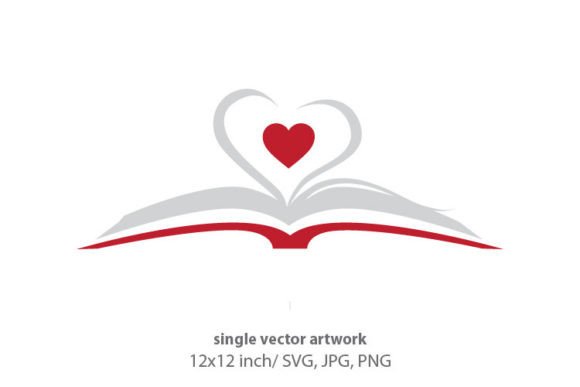
Book and Heart, Logo Icon
A Quiet Moment, Stitched Right
When I first opened Book and Heart, Logo Icon, I didn’t see just another clipart file—I saw a small, tender gesture. It’s clean but not cold, symbolic but not stiff. The book sits gently beneath the heart, both shapes balanced and slightly rounded, with soft negative space between them. There’s no intricate linework or ornate flourishes—just confident, intentional simplicity. That tells me this isn’t meant for flashy apparel or oversized branding. It’s made for quiet intention: a baby onesie, a linen tea towel for a bookish boutique, a custom embroidered patch on a librarian’s apron, or a delicate tote bag for a local indie bookstore.
Where This Design Finds Its Truest Voice
I recently used Book and Heart, Logo Icon as the centerpiece for a set of personalized baby gifts—linen burp cloths, organic cotton onesies, and a tiny quilt square. It stitched cleanly at 3.5" wide on medium-weight cotton with light tear-away stabilizer. The heart’s curve held well in satin stitch, and the book’s spine read clearly without crowding. Customers responded strongly—not to “how pretty,” but to “how *true* it feels.” That’s the mark of a design that supports meaning, not just decoration.
It works especially well for:
- Embroidered patches — its compact shape and open interior translate beautifully into layered fabric applique;
- Tote bag design — centered above a pocket or subtly tucked into a corner, it adds warmth without shouting;
- Baby embroidery — gentle theme, low stitch density, and no fine details make it safe and soothing;
- Holiday embroidery — pair it with a simple “Read Together” script for cozy Christmas gifts or back-to-school bundles;
- Small shop product — perfect for boutique branding on packaging tags, shelf cards, or handmade greeting cards.
Where to Pause—and Test First
This isn’t a one-size-fits-all embroidery file. Its strength lies in restraint—but that same restraint means it can disappear if misapplied. On dark fabric, the heart’s outline needs careful thread color contrast; I recommend testing in both black and ecru thread on scrap before stitching the final piece. On stretchy fabric like jersey or lightweight knits, the clean lines can blur unless you use cut-away stabilizer and reduce stitch speed.
Watch closely on:
- Curved surfaces — caps or curved pillow covers may distort the symmetry unless hooped precisely;
- Textured fabrics — burlap or heavy terry cloth can swallow the subtle curves; increase underlay or adjust fill angle;
- Small hoop sizes — while scalable as a vector, shrinking below 2" risks losing clarity in the book’s spine and heart’s lower curve;
- Frequent-wash items — because it relies on smooth satin and fill stitches (not dense running stitch), confirm thread quality and wash-test finished samples.
What It Adds to Your Finished Product—Beyond Aesthetics
Book and Heart, Logo Icon elevates perceived value not through complexity, but through resonance. When customers see it on a handmade pillow cover or a teacher’s gift set, they don’t just register “cute”—they feel seen. That builds trust. For Etsy sellers and craft fair vendors, that emotional alignment translates directly into repeat buyers and thoughtful reviews. It also supports brand consistency: whether you’re selling digital embroidery files or physical embroidered goods, this icon reads as cohesive, calm, and intentionally crafted—not mass-produced or generic.
It doesn’t scream “commercial embroidery,” but it fits perfectly in commercial contexts where authenticity matters: school libraries, literacy nonprofits, indie bookstores, mindfulness studios, or children’s therapy practices. And because it’s delivered as an SVG, JPG, and PNG—all built in Adobe Illustrator—you can scale it confidently for printable mockups, social media previews, or even laser-cut wood versions alongside your embroidered line.
Practical Notes from My Hoop Table
Before using Book and Heart, Logo Icon in any project—personal or commercial—here’s what I always do:
- Test on scrap fabric matching your final material, with the exact stabilizer and thread you’ll use;
- Check thread color contrast on both light and dark backgrounds—especially important for Etsy listing mockups;
- Review stitch density in your embroidery software: avoid overfilling the heart or book base, which can cause puckering on lightweight cotton;
- Confirm hoop size compatibility — while the artboard is 12×12", your actual stitched version may need adjustment depending on fabric drape and machine limits;
- Inspect small details — zoom in on the junction where heart meets book; ensure no stray anchor points or overlapping paths exist in the vector;
- Test black-and-white mockups — many buyers imagine products in monochrome first, especially for nursery or minimalist branding;
- Use proper stabilizer — light to medium weight works best for most applications, but switch to cut-away for knits or high-wear items;
- Verify licensing — since the description says “You Can use this digital graph,” confirm whether personal, small-batch commercial, or resale rights apply before bundling it into digital embroidery files or printed product kits.
Final Thought: A Design That Listens
Book and Heart, Logo Icon doesn’t dominate a garment or item—it settles in beside the wearer or user, quietly reinforcing a feeling: curiosity, care, connection. That’s rare. In a landscape full of loud, trendy icons, this one earns its place by being useful, legible, and emotionally honest. Whether you’re stitching for a client, prepping for a craft fair, or building a cohesive line of handmade products, it’s a reliable, human-scaled asset—one that reminds us why we choose embroidery in the first place: to make meaning, stitch by thoughtful stitch.