Brain and Heart: Clean SVG Graphics & Icons
As a graphic designer who’s built brand identities for wellness studios, mindful product lines, and handmade businesses over the past 12 years, I recently evaluated Brain and Heart for a real client project — a boutique line of eco-friendly journaling kits targeting educators and mental wellness practitioners. My goal wasn’t just to “use an icon” — it was to find a visual anchor that communicates thoughtful intention, emotional intelligence, and quiet sophistication without leaning into cliché.
A First Impression That Feels Intentional, Not Generic
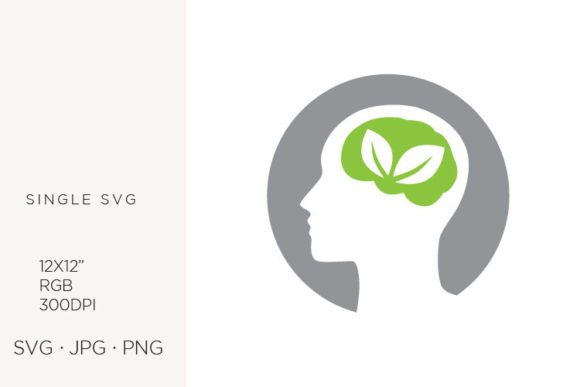
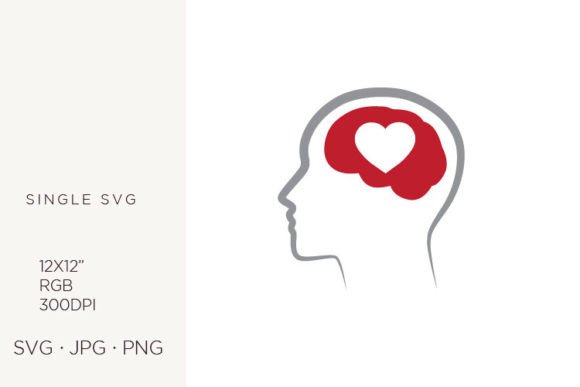
The moment I opened the single SVG artwork, I noticed its confident negative space and balanced asymmetry: the brain rendered with soft organic contours, the heart subtly integrated—not overlaid, not forced—into its lower left lobe. There’s no medical sterility, no cartoonish exaggeration. It reads as modern design with warmth, not clinical illustration or greeting-card sentimentality. That nuance matters. For a client whose mission bridges cognitive reflection and compassionate action, this isn’t decorative clipart—it’s a conceptual shorthand.
Where Brain and Heart Earns Its Place in Real Projects
In practice, Brain and Heart performs strongest where meaning and mood must coexist seamlessly:
- Logo design for holistic coaching practices, therapy collectives, or mindfulness apps — especially when paired with clean sans serif fonts (think Inter or Poppins) or restrained script fonts that echo handwritten authenticity;
- Packaging design for journals, affirmation cards, or herbal tea blends — it scales beautifully on die-cut labels and wraps without losing legibility;
- Printable design assets for Etsy sellers: wall art prints, guided journal headers, printable affirmation cards — the SVG exports crisply at any size, and the vector paths remain editable in Illustrator or Affinity Designer;
- Cricut project files for crafters making custom tote bags, enamel pins, or vinyl decals — the clean outlines cut precisely, and the shape holds integrity even at 2-inch dimensions;
- Social media graphics for Instagram carousels or Pinterest pins — it adds symbolic weight to headlines about self-awareness, growth mindset, or emotional resilience without competing with text;
- Brand identity systems as a supporting element: watermark textures, divider icons in Canva templates, or subtle background motifs in email newsletters.
Where to Apply Thoughtful Restraint
This isn’t a universal-fit asset. I’d avoid using Brain and Heart in contexts demanding extreme minimalism — like corporate fintech branding or luxury skincare packaging — where visual hierarchy must be razor-sharp and symbolism implied, not illustrated. It also risks visual noise in crowded layouts: think multi-element flyers or dense editorial spreads where every shape competes for attention. On low-contrast backgrounds (e.g., light gray on off-white), test readability early — the organic lines soften slightly, so contrast checks are non-negotiable.
Designer Notes You’ll Actually Use
Before dropping Brain and Heart into a client file, I run these practical checks:
- Test black-and-white output: Does it retain clarity in monochrome? Yes — its stroke weight and spacing hold up in grayscale print, critical for letterpress stationery or embroidery digitizing.
- Preview on mockups: I place it on realistic product mockups — ceramic mugs, linen notebooks, recycled paper cards — to assess scale, proportion, and emotional resonance in context.
- Verify SVG editability: Open the file in Illustrator — all paths are ungrouped, strokes are outlined or consistent, and anchor points are clean. No hidden layers or raster fragments.
- Check licensing: Confirm the commercial license explicitly permits use in client work, print-on-demand platforms (like Redbubble or Printful), and digital products sold on Etsy. This is not clipart for personal blogs — it’s a commercial design asset.
- Font pairing test: Try it beside serif (Lora), sans serif (Montserrat), script (Dancing Script), and display fonts (Cinzel). It harmonizes best with humanist sans serifs and gentle scripts — never bold condensed type.
- Contrast validation: Run it through WebAIM’s contrast checker against light/dark backgrounds. Passes AA at 24pt+, but verify at smaller sizes if used in UI or app icons.
Why It Strengthens Visual Trust — Not Just Aesthetics
What makes Brain and Heart more than a decorative SVG design is how it shapes perception. In the journaling kit project, placing it beside hand-drawn typography and textured paper scans elevated the entire visual hierarchy — signaling care in both concept and execution. Clients notice that. So do end users scrolling an Instagram feed or holding a printed card. It quietly reinforces brand consistency across touchpoints: same symbol appears on the website hero, the product label, the thank-you card, and the workshop handout. That repetition builds recognition without repetition fatigue — because the shape is distinctive yet versatile.
Final Verdict: A Strategic Creative Asset, Not Just Another Icon
I approved Brain and Heart for the journaling kit launch — not because it’s “cute” or “on-trend,” but because it functions like a well-designed word: precise, resonant, and quietly memorable. It supports storytelling rather than interrupting it. For designers building brand identity, marketers crafting campaign visuals, crafters scaling handmade business, or digital sellers curating design bundles, this single SVG artwork delivers more than visual flair. It delivers intentionality — and in today’s saturated creative marketplace, that’s the rarest design asset of all.