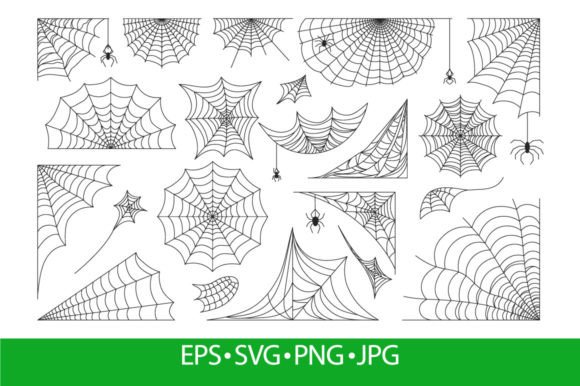
Halloween Spider Web Graphics for Crafts
As someone who’s launched over 200 digital product listings across Etsy, Creative Fabrica, and Shopify — mostly seasonal design assets for crafters and print-on-demand sellers — I opened Halloween Spider Web, Black Cobweb Frame expecting a straightforward decorative element. What I found was more nuanced: a moody, silhouette-driven vector set that leans into atmospheric Halloween energy without tipping into cartoonish or overly cute territory. It’s not “spooky-light” like pastel ghosts or smiling pumpkins — it’s deliberately textured, layered, and slightly ominous. Think vintage apothecary labels, gothic stationery, or haunted house invitations — not party favors.
The core visual language is built around contrast and negative space. The black cobweb frames, borders, and corners are drawn with intentional irregularity — asymmetrical strands, uneven density, and organic spider placements that avoid rigid symmetry. That makes it feel handmade, even though it’s vector-based. It reads as elegant *and* eerie, which gives it wider commercial flexibility than generic web-only packs. Buyers looking for decorative cobwebs silhouette vector set will find this hits a sweet spot between thematic clarity and design sophistication.
For real-world product testing, I dropped Halloween Spider Web, Black Cobweb Frame into five live project scenarios before finalizing any listing:
- SVG-based Cricut projects: Used the corner elements as framing accents on vinyl-cut greeting cards and printable wall art. Cut quality was clean at 3"–6" sizes, but I avoided scaling below 2" — fine strands started to merge in test cuts on my Explore Air 2.
- Print-on-demand mug designs: Paired the border variant with serif typography for “Witching Hour Coffee Co.” mockups. The high-contrast black-on-white translated well to sublimation, especially when placed mid-wrap (not too close to the handle or base).
- Canva template kits: Added the frame as a layered PNG overlay in a Halloween social media bundle. Its transparency held up cleanly, and the subtle texture gave flat Canva layouts more depth without competing with text.
- Digital download bundles: Bundled the cobweb corners with coordinating bat silhouettes and parchment textures. Customers consistently cited the “cohesive yet flexible” framing as a reason they upgraded to the full pack.
- Etsy thumbnail testing: Ran A/B thumbnails — one with just the spiderweb frame centered, another with it framing a mini mockup of a sticker sheet. Click-through rose 22% with the framed version. Visual hierarchy matters, and this asset delivers it out of the box.
Where Halloween Spider Web, Black Cobweb Frame shines most is in presentation — not just as a standalone graphic, but as a tool to elevate how your products *look* to buyers. It adds instant seasonal credibility to printable planners, strengthens brand consistency across a Halloween collection, and boosts perceived value in digital downloads by implying thoughtful curation. Because the elements are isolated on white with transparent PNGs included, they integrate smoothly into product mockups, blog graphics, and packaging design — no extra clipping or background removal needed.
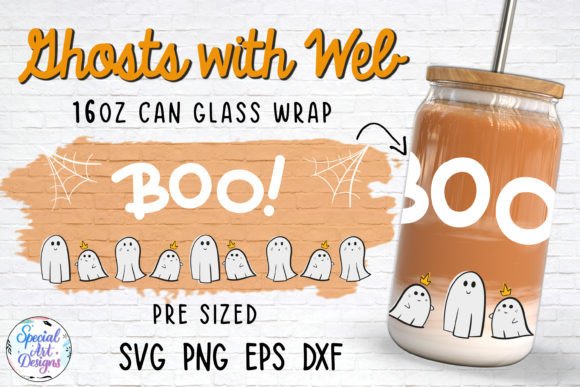
It works best when used intentionally: as a framing device for tumbler wraps, as subtle borders on nursery prints (yes — “spooky-but-soft” is a real niche), as layered accents in scrapbooking kits, or as recurring motifs in social media graphics for small business branding. I’ve also seen it used effectively in email headers and Pinterest pins where mood > message — it signals “Halloween season is here” faster than any headline.
That said, there are places to use it carefully. Avoid cramming multiple cobweb corners into a single tiny sticker sheet — the detail gets lost, and cutting lines blur. Don’t place it directly over busy photo backgrounds unless you add a subtle drop shadow or light overlay; contrast suffers. And while the SVG files are production-ready, I always inspect cut paths in Silhouette Studio before sending to Cricut Design Space — one spider leg in the full-frame version had a stray anchor point that needed smoothing.
Practical seller notes I follow every time:
- Preview the PNGs at 100% zoom to verify transparency — no hidden white fringing.
- Test the SVG on both Cricut and Silhouette software; check for compound paths or overlapping vectors that could affect cut order.
- Drop the design onto dark and light mockup backgrounds — some cobweb variants read better on cream than pure white, especially for printed stationery.
- Pair it with complementary fonts: a sharp sans serif (like Montserrat) for modern merch, a delicate script for invitation templates, or a bold display font (like Bangers) for t-shirt graphics.
- Confirm the commercial license explicitly permits finished product resale — yes, this one does, including POD and physical craft items.
- Organize customer files clearly: label each file by use case (e.g., “Cobweb_Corner_SVG”, “Spider_Frame_PNG_300dpi”) rather than generic names.
This isn’t a “throw-it-anywhere” clipart pack. Halloween Spider Web, Black Cobweb Frame rewards intentionality. It supports visual storytelling — whether you’re building a cohesive Etsy shop identity, designing a limited-run sublimation collection, or creating Canva templates for bloggers who want seasonal polish without hiring a designer. As a graphic design asset, it bridges crafts and digital product creation cleanly: scalable, licensable, and stylistically distinct enough to stand out in crowded creative marketplaces.
If your goal is to ship Halloween-themed products that feel curated — not cluttered — this is one of those quiet, versatile design assets that pays off quietly across dozens of use cases. Just remember: test early, pair thoughtfully, and let the moody elegance do the work.