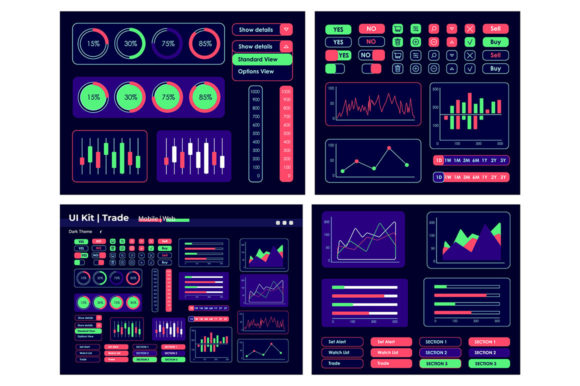
Sales Performance Insights UI Elements: Graphics & UI Kits
First Impression: Clean, Confident, and Quietly Sophisticated
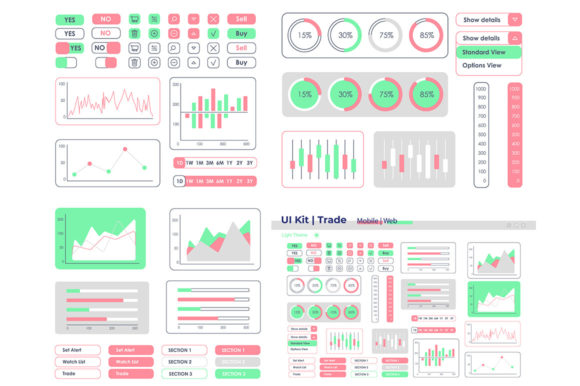
When I opened Sales Performance Insights UI Elements, my first thought wasn’t “dashboard”—it was “elegant accent.” Despite its origin as a Ux And Ui Kits asset built for commerce dashboards, the flat interface buttons template and isolated vector dashboard components translate surprisingly well into real-world small business branding. The dark theme lends quiet authority; the clean lines suggest precision without coldness. It feels modern but not sterile—confident but approachable. For a local business like *Hearth & Hive*, a handmade soap and candle brand sourcing botanicals from regional farms, this kit reads as premium yet grounded—neither overly techy nor distractingly decorative. It leans into clarity, consistency, and calm professionalism—ideal for food businesses, boutique owners, or skincare brands that value transparency and thoughtful design.
Where This Graphic Design Asset Truly Shines in Local Business Use
- Product labels and packaging accents: The vector dashboard components work beautifully as subtle borders, corner flourishes, or divider lines on jar labels, tea box wraps, or bakery bag seals—adding structure without overwhelming handcrafted warmth.
- Hero graphics and social media banners: Isolated icons (like stylized graphs or trend arrows) scale cleanly for Instagram carousels, Facebook cover images, or seasonal campaign posts—especially when paired with warm neutral backgrounds and serif body copy.
- Printable inserts and thank-you cards: Flat interface buttons template elements double as elegant “shop now” or “join our circle” callouts inside greeting cards, order inserts, or subscription box liners—reinforcing brand identity without shouting.
- Menu graphics and price lists: For coffee shops or florists updating seasonal menus, these components offer clean typographic anchors—think minimalist section headers or category dividers that guide the eye without competing with photography.
- Product mockups and promotional ads: Because the assets are commerce-isolated vectors, they drop seamlessly into Canva templates or Adobe mockups—enhancing shelf appeal for Etsy listings, farmers’ market flyers, or local magazine ads.
How It Strengthens Real Small Business Branding
Used intentionally, Sales Performance Insights UI Elements supports stronger first impressions—not by being flashy, but by signaling care in execution. When applied to a candle brand’s amber glass label, those refined vector dashboard components create clearer visual hierarchy between scent name, origin story, and burn instructions. On a children’s product brand’s thank-you card, the flat interface buttons template becomes a soft, rounded “thank you” badge—building emotional connection through consistency. For a food business navigating crowded grocery shelves, the kit’s clean geometry improves product recognition at a glance. Most importantly, it helps unify digital and physical touchpoints: the same icon used in a Shopify banner appears subtly on a hang tag, reinforcing trust through repetition. That cohesion is what transforms casual buyers into loyal local customers.
Best Fit: Packaging Accents, Boutique Visuals, and Seasonal Campaigns
This graphic design asset excels where subtlety meets intention—on apothecary-style product labels, linen-wrapped gift boxes, café chalkboard menu overlays, or holiday-themed social media graphics. It’s especially effective for handmade businesses needing polished marketing visuals without sacrificing authenticity. Think lavender-scented soap bars with minimalist SVG design accents beside hand-lettered typography—or a home decor shop using vector dashboard components as delicate frame elements in printable wall art bundles. Its strength lies in supporting, not overshadowing—the brand identity, not defining it.
Use With Care: Context Matters
Avoid forcing Sales Performance Insights UI Elements into spaces where clarity trumps decoration: ingredient-heavy food labels, legal disclaimers, or ultra-minimalist luxury branding. It’s less effective on very small labels (under 1.5” width) where fine vector details may blur in print. Steer clear when layered over low-contrast backgrounds—those flat interface buttons lose definition against muted greys or creams unless adjusted. And while the dark theme works elegantly in digital mockups, test thoroughly on kraft paper or recycled packaging—it may need lightening or color-shift adjustments for optimal readability.
Practical Brand Designer Notes for Real Projects
- Always test the assets on real packaging mockups—not just screen previews—especially for foil-stamped or embossed applications.
- Check black-and-white usage: some SVG design elements rely on subtle gradients that vanish in monochrome printing.
- Preview PNG design versions on small labels and hang tags—transparency edges must hold up at 100–150 dpi for standard print.
- Test alongside your brand fonts: does the flat interface buttons template harmonize with your script font logo? Does it anchor a sans serif price list without visual tension?
- Compare with competitor packaging—does it elevate your shelf presence or blend in?
- Confirm commercial licensing before applying to physical product sales, client branding, or digital products like Canva templates.
- Inspect vector editability: can you easily recolor, resize, or simplify paths for embroidery or laser-cutting needs?
Final Thought: A Quiet Tool for Confident Local Brands
Sales Performance Insights UI Elements isn’t a one-size-fits-all logo design solution—but as a graphic design asset for small business branding, it’s quietly powerful. For the florist designing spring campaign posters, the coffee roaster updating bag seals, or the children’s product brand launching its first retail line, this Graphics kit delivers professional polish without pretense. It supports consistency across packaging design, social media graphics, and printed marketing visuals—helping local businesses communicate competence, care, and character. In an era where handmade businesses compete with global giants, that kind of intentional, scalable refinement isn’t just nice to have. It’s essential infrastructure for trust, recognition, and growth.