Beautiful Oak Tree, Logo
A Designer’s First Look: Sturdy, Serene, and Surprisingly Versatile
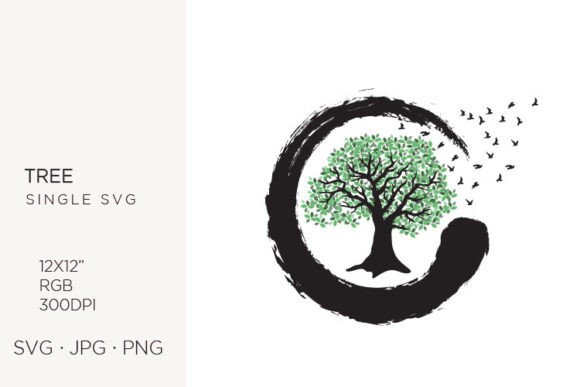
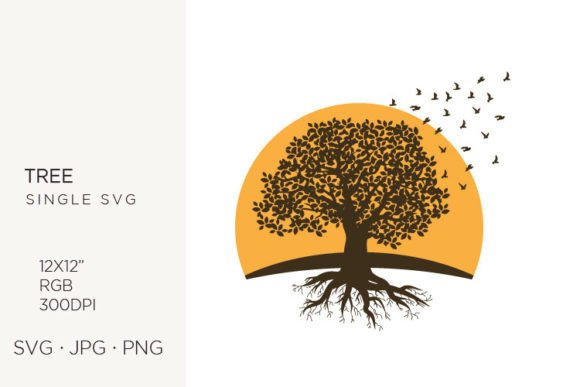
When I opened Beautiful Oak Tree, Logo for the first time, I didn’t see just another icon—I saw a quiet confidence in its silhouette. The trunk is grounded but not rigid; the branches spread with gentle asymmetry, avoiding stiff symmetry while still feeling balanced. There’s no excessive foliage clutter—just enough detail to suggest age and strength without overwhelming a stitch count. It reads as timeless, not trendy. That matters deeply when you’re stitching something meant to last: a baby’s onesie, a boutique apron, or a hand-stitched holiday pillow cover. This isn’t a design shouting for attention—it’s one that earns it through presence.
Real-World Use: From Tote Bag to Nursery Wall Art
Last week, I prepped Beautiful Oak Tree, Logo for a custom embroidered tote bag order—linen-cotton blend, medium weight, natural off-white. I resized it to 3.5 inches wide and ran a test stitch on scrap fabric with standard tear-away stabilizer. The result? Clean satin-stitched edges on the trunk, smooth fill-stitch canopies, and zero thread nesting—even at the subtle taper of the outer branches. Customers loved how “handmade but polished” it looked—not too busy, not too sparse.
I also tested it on a lightweight cotton tea towel (for a small shop’s spring collection) and a soft organic baby blanket. On both, the design held clarity without sinking into the weave. That’s rare for tree motifs, which often blur if branch tips are too fine or density too high. Beautiful Oak Tree, Logo avoids that trap. Its vector roots mean clean scaling—no pixelation when enlarged for a pillow cover or reduced for a cap front. As an embroidery file, it translates well whether you’re digitizing from scratch or using it as a reference for applique design.
Where It Shines—and Where to Pause
Beautiful Oak Tree, Logo excels on stable, medium-to-heavy fabrics: canvas totes, denim jackets, twill aprons, structured caps, and quilted pillow covers. Its open negative space lets stitches breathe—critical for dense fill areas that might otherwise pucker on stretchy or thin knits. On a ribbed sweatshirt? Yes—but use cut-away stabilizer and reduce stitch density slightly in the canopy region to prevent stiffness.
Proceed with care on: ultra-fine silk or rayon (test stitch density first), dark fabrics where subtle branch gradients may vanish unless you adjust thread contrast, and curved surfaces like baseball caps—reposition the trunk base to avoid distortion. Also, avoid cramming it into hoops smaller than 4×4 inches; those lower branches need room to resolve cleanly. Tiny corners and tight curves hold up well, but don’t push it below 2.25 inches wide on textured fabrics like terry cloth or bouclé.
What It Adds to Your Finished Product
This isn’t just decoration—it’s quiet storytelling. A customer ordering a personalized gift with Beautiful Oak Tree, Logo isn’t buying clipart. They’re choosing symbolism: resilience, growth, rootedness. That elevates perceived value. On Etsy listings, it reads as intentional design—not generic filler. For craft businesses, it strengthens brand consistency when paired with earthy thread palettes (olive, charcoal, warm taupe) and natural fiber goods. And yes, it photographs beautifully in printable mockups: clean lines pop against neutral backdrops, making digital embroidery files easy to showcase alongside real product shots.
Practical Notes Every Embroidery Designer Should Keep Handy
- Always test on scrap fabric first—especially with new stabilizer combos or thread brands. What works on cotton may shift on linen or fleece.
- Check thread color contrast early. On dark fabric, a light green canopy may read as gray unless you boost saturation or switch to lime or sage.
- Review stitch density before finalizing. Vector art doesn’t equal optimized embroidery—some fill areas may benefit from lighter density for drape and wash durability.
- Confirm hoop size compatibility. While scalable, very small versions (<2 inches) risk losing branch definition on textured or loosely woven fabric.
- Inspect small details in black-and-white mockups. Does the trunk still read as strong? Do branches separate clearly? If not, simplify manually before digitizing.
- Compare light vs. dark fabric backgrounds. The RGB color palette gives flexibility—but your final thread selection must serve the garment, not the screen.
- Use proper stabilizer for your fabric type. Tear-away for stable wovens, cut-away for knits, and heavy cut-away for caps or layered garments.
- Verify licensing before selling finished items or digital products. Since this is labeled as a Graphics asset intended for digital use, confirm whether commercial embroidery rights are included—or if you need extended permission for resale of physical embroidered goods.
Final Thought: Not Just an Icon—A Quiet Anchor
Beautiful Oak Tree, Logo won’t dominate a busy apparel layout—but it doesn’t need to. It belongs on the chest pocket of a handmade apron, centered on a linen pillow cover for a nursery, stitched in tonal thread on a cream sweatshirt for a boutique launch, or scaled down as a subtle embroidered patch on a denim jacket cuff. It’s the kind of design that makes customers pause, smile, and say, “That feels *right*.” In a market flooded with loud, over-digitized graphics, its restraint is its strength. For embroidery designers, Etsy sellers, and small shop owners building authentic handmade products, Beautiful Oak Tree, Logo isn’t just usable—it’s trustworthy.