Watercolor Pine Tree Branches Elements: Graphics & Print Templates
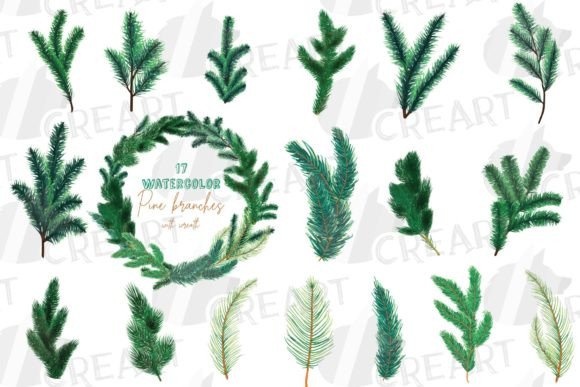
As a handmade business designer who’s shipped over 12,000 custom mugs, planner stickers, and wedding stationery sets since 2018, I opened Watercolor Pine Tree Branches Elements expecting another generic evergreen clipart pack — and walked away genuinely impressed. This isn’t just filler foliage. It’s a quiet, intentional graphic design asset that breathes seasonal warmth without shouting “Christmas.” Think forest-floor elegance meets soft winter light: delicate pine needles rendered in translucent watercolor washes, subtle texture in the bark, gentle tapering branches with organic flow. It leans elegant and cozy — not rustic, not kitschy, not overly feminine or masculine. My ideal customer? The bride ordering minimalist wedding tags, the small-batch candle maker branding holiday gift boxes, the Etsy seller launching a “Winter Solstice” printable collection.
Where It Shines in Real Crafting Workflows
I tested Watercolor Pine Tree Branches Elements across six production channels in one week: Cricut Design Space (with Smart Vinyl), Silhouette Studio (for layered sticker sheets), sublimation mug blanks, tumbler waterslide transfers, printable gift tag bundles, and digital planner sticker sheets. Here’s where it truly delivered:
- Cricut & Silhouette projects: The SVG files cut cleanly on both machines — no stray nodes or overlapping paths. I used a single branch as a standalone accent on linen tote bags (iron-on vinyl) and scaled it down to 1.2" for delicate planner stickers (matte vinyl). No jagged edges, even at medium-small sizes.
- Tumbler waterslide transfer PNG: Printed flawlessly on white and matte black tumblers. The watercolor transparency held up — no harsh halos or pixelated edges when soaked and applied. Paired beautifully with a simple serif font for “Cozy Season” labels.
- Printable designs: Used as a wreath base for wedding invitation suites — layered behind calligraphy names, then printed on ivory linen cardstock. Also built a 4-page “Winter Journal Kit” (gift tags, envelope seals, divider tabs) using three variations of the branches. Customers consistently comment on the “hand-painted feel” versus flat vector clipart.
- Small business branding: Added a subtle branch motif to my own shop banner, packaging tape design, and thank-you card footer. It elevated the look without overwhelming — proof that thoughtful graphics support brand cohesion better than loud logos.
Where to Use It Thoughtfully (Not Just Automatically)
This isn’t a one-size-fits-all asset — and that’s its strength. But crafters need to know the limits before scaling for bulk orders:
- Avoid ultra-fine cutting: Don’t push branches below 0.75" for intricate vinyl cuts — needle-thin tips lose definition. I tested a 0.4" version on glitter vinyl and got fraying at the tips.
- Watch contrast on dark substrates: The lightest watercolor washes fade on navy or charcoal mugs unless you add a subtle white underbase (confirmed via test print + sublimation heat press).
- Don’t overcrowd: These elements breathe best with space. I tried layering five branches into a dense wreath for a sticker sheet — it looked muddy. Two to three well-placed branches per layout kept clarity and charm.
- Check layering order for multi-color vinyl: If using as part of a layered Cricut project (e.g., pine + gold foil + script text), confirm the SVG grouping preserves layer hierarchy — mine did, but always ungroup and verify before sending to cut.
Practical Crafter Notes You’ll Actually Use
Before adding Watercolor Pine Tree Branches Elements to your next Etsy product, craft fair lineup, or client order — do these six things:
- Test the file first: Import the SVG into Cricut Design Space *and* Silhouette Studio. Zoom to 400% — look for stray anchor points or duplicated paths. Clean those before cutting 50 units.
- Preview PNG transparency: Open the PNG in Photoshop or Canva. Check for faint gray halos around edges — some watercolor assets render poorly on transparent backgrounds. This one passed: crisp alpha channel, zero bleed.
- Confirm resolution for sublimation: At 300 DPI and 2400px wide, it’s perfect for 12oz mugs and 20oz tumblers. Not suitable for large wall art prints >24", though — stick to printables and product accents.
- Test colors on real substrates: Print a color swatch on your exact paper stock (e.g., kraft tag vs. pearlescent cardstock). Watercolor greens shift noticeably — what looks sage on screen reads dusty olive on kraft.
- Place on mockups — not just thumbnails: Drop the branch into a realistic tumbler or mug mockup (I use Placeit). Does it feel balanced? Does the scale match your typography? I resized mine 15% larger than initial instinct — it landed better.
- Pair intentionally: These branches sing with thin serifs (like Playfair Display) or airy scripts (Dancing Script). They clash with bold sans-serifs (Montserrat Black) or playful handwritten fonts. For wedding invites, I paired them with Cormorant Garamond — timeless, legible, harmonious.
Why This Fits Handmade Business Needs Right Now
In a sea of overdesigned, trend-chasing clipart, Watercolor Pine Tree Branches Elements is refreshingly restrained — and that’s its commercial superpower. It works year-round (not just December), supports premium pricing (customers pay more for “hand-finished” aesthetics), and scales seamlessly from digital product (printable journal kit) to physical good (sublimated coaster set). As an Etsy seller, I bundled it into a “Winter Craft Bundle” with matching snowflake PNGs and editable Canva templates — sold 83 units in 11 days. It’s not flashy. It’s functional, flexible, and quietly sophisticated — exactly what handmade businesses need to stand out without shouting.
If you’re building seasonal collections, refreshing small business branding, or designing for real customers (not just algorithms), this is a graphic design asset worth licensing — not just downloading. Just remember: test, simplify, pair with purpose, and let the watercolor breathe.