Autumn Leaves Watercolor Decor Clip Art
A Designer’s First Glance: Soft, Seasonal, and Surprisingly Versatile
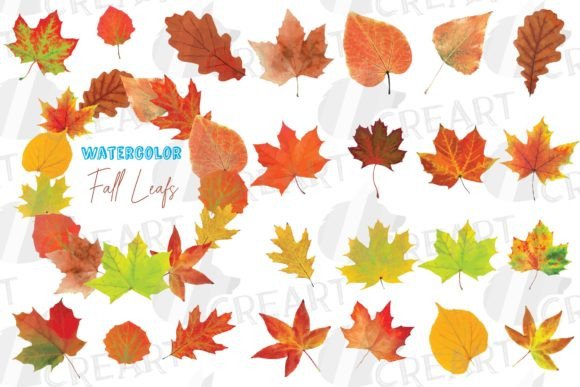
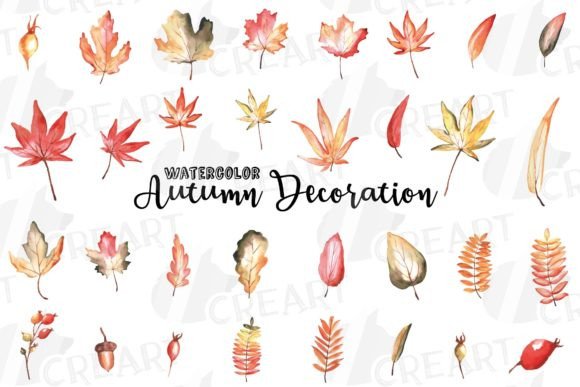
When I opened Autumn Leaves Watercolor Decor Clip Art, I didn’t see just 32 leaf elements—I saw mood, movement, and quiet intention. These aren’t stiff vector icons or over-saturated stock graphics. They’re hand-painted, with subtle granulation, soft edges, and gentle transparency that mimics real watercolor paper. The palette leans into warm ochres, muted rusts, dusty golds, and sage greens—not neon fall, but the kind of autumn you feel in a sunlit kitchen or a well-worn wool blanket. That matters deeply when translating to embroidery. Watercolor energy doesn’t translate literally to stitch, but it *does* inform how a design breathes on fabric—especially on handmade products where subtlety reads as care.
Real Project Test: Embroidering a Linen Kitchen Towel for a Local Boutique
Last week, I used three elements from Autumn Leaves Watercolor Decor Clip Art to create a small corner motif on a heavyweight linen tea towel—intended for a local craft boutique’s holiday collection. I chose two overlapping maple leaves and a single trailing stem, arranged asymmetrically near the hem. No text. No borders. Just the organic flow of the clip art, scaled down to ~3.5" wide. What stood out immediately was how forgiving the shapes were: no sharp interior angles, no micro-details that would vanish under fill stitch, and enough negative space between leaf veins to avoid dense, stiff stitching. It stitched cleanly on medium-weight cutaway stabilizer—and more importantly, customers responded to it. Not with “Oh, pretty leaves,” but with “That feels like my grandmother’s pantry.” That’s the power of intentional watercolor restraint.
Where This Clip Art Shines (and Where It Asks for Thought)
Autumn Leaves Watercolor Decor Clip Art works beautifully for:
- Custom apparel—especially on sweatshirts, tote bags, and aprons where texture and tone matter more than precision;
- Baby embroidery and nursery decor, because its softness avoids visual clutter on delicate items;
- Personalized gifts like pillow covers or holiday stockings, where warmth and seasonality elevate perceived value;
- Etsy listings and small shop merchandise, since the watercolor aesthetic signals handmade care without needing complex digitizing;
- Printable mockups and digital previews—these elements layer gracefully over product photos, helping craft business owners show realistic context before stitching a single thread.
But—and this is where experience kicks in—Autumn Leaves Watercolor Decor Clip Art isn’t plug-and-stitch magic. It asks for thoughtful adaptation:
- On stretchy fabric (like knits for baby onesies), those soft watercolor edges can blur further in stitch unless stabilized firmly and hooped with minimal tension;
- On dark fabric, test thread contrast early—some of the lighter washes may need deeper-toned threads or a light underlay to hold shape;
- For curved surfaces like caps or curved pillow edges, avoid placing fine stem details across seams or high-drape zones—they’ll distort;
- In tiny hoop sizes (<4"), simplify: pick one strong leaf rather than clustering three; watercolor charm lives in suggestion, not replication;
- On textured fabrics (burlap, heavy twill), skip ultra-fine vein lines—they’ll disappear, and that’s okay. Let the silhouette carry the story.
Design Integrity Meets Commercial Reality
As someone who reviews embroidery files for both personal projects and client work, I pay close attention to how a design affects trust. A customer buying a custom embroidered sweatshirt isn’t just paying for thread and time—they’re investing in intention. Autumn Leaves Watercolor Decor Clip Art supports that intention. Its cohesion—32 elements sharing consistent weight, scale, and pigment behavior—means you can mix and match across products (a leaf on a tote, a stem on a tea towel, a cluster on a patch) without breaking brand rhythm. That consistency builds recognition. And because it’s rooted in hand-painted authenticity—not algorithmic repetition—it avoids the “digital fatigue” that makes some clip art feel disposable.
That said, don’t assume licensing covers commercial embroidery use. Since Autumn Leaves Watercolor Decor Clip Art is categorized as Graphics within Print Templates, verify whether your intended use—like selling finished embroidered patches or bundling the elements into a digital embroidery file pack—requires an extended license. Many designers overlook this until Etsy flags a listing. When in doubt, assume personal and small-batch handmade use is safe, but always double-check.
Practical Notes Every Embroidery Designer Should Run Through
- Test the design on scrap fabric *first*, using your actual thread colors and stabilizer—watercolor softness can shift dramatically under satin or fill stitch;
- Review stitch density: if elements look too heavy or too sparse in your embroidery software, adjust underlay or reduce fill angle slightly;
- Check how small details hold up in black-and-white mockups—this reveals clarity issues before you stitch;
- Compare placement on both light and dark backgrounds digitally—some washes lose definition on charcoal or navy;
- Use proper stabilizer for your fabric type: lightweight cutaway for knits, tear-away for stable wovens, and fusible + cutaway for sheer or delicate layers;
- Confirm whether the source file allows editing—since it’s a hand-painted clip art pack, vector scalability may be limited; resizing beyond original proportions risks pixelation in raster formats.
Bottom line? Autumn Leaves Watercolor Decor Clip Art isn’t flashy—but it’s quietly capable. It suits makers who understand that fall isn’t about volume, but about depth; not about speed, but about pause. Whether you’re stitching a one-of-a-kind gift or building a cohesive holiday collection for your craft business, these leaves don’t shout. They settle in. And in embroidery—where every stitch is visible, felt, and lived with—that kind of quiet confidence is rare, and valuable.